Your Pool Looks Clean—So Why Does It Still Need Weekly Pool Service?

One of the best things about owning a pool in Scottsdale is walking into your backyard and seeing beautiful, sparkling blue water.
It looks clean. It looks refreshing. And it looks ready for swimming.
So it's natural to wonder: if the water looks perfectly clear, does the pool really need to be cleaned every week?
It's a fair question, especially during the cooler months when your pool isn't being used quite as often.
The interesting thing about swimming pools is that appearance only tells part of the story.
A pool can look beautiful while still needing attention to its water chemistry, filtration system, and equipment.
Here's why regular weekly pool maintenance matters—even when your Scottsdale pool already looks great.
1. Clear Water Doesn't Always Mean Balanced Water
One of the biggest misconceptions about swimming pools is that clear water automatically means the water is properly balanced.
Unfortunately, that's not always true.
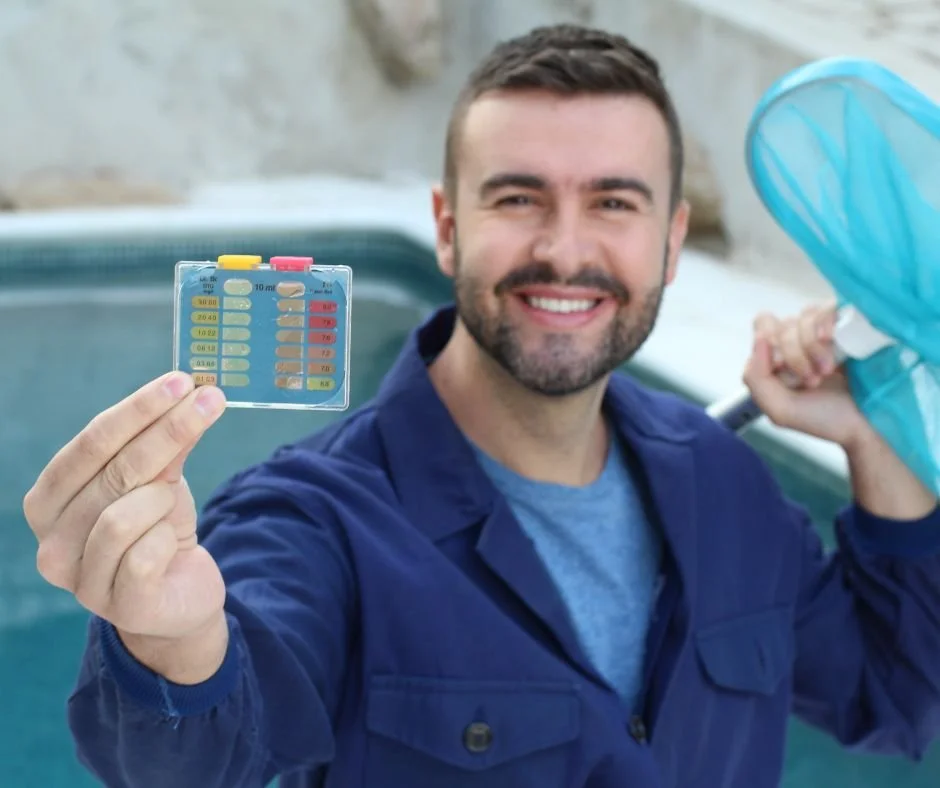
Pool water can look perfectly clear while having chlorine levels that are too low, pH levels outside the recommended range, or other chemical imbalances.
Proper water chemistry matters for several reasons.
First, maintaining an appropriate sanitizer level helps control harmful microorganisms.
Second, balanced water helps protect pool surfaces and equipment.
And third, comfortable water chemistry can make swimming more enjoyable by reducing the likelihood of irritation associated with improperly balanced water.
During a typical weekly pool service visit, your technician tests important water chemistry measurements and makes adjustments based on the results.
This is especially important in Scottsdale, where intense sunshine, high temperatures, and frequent evaporation can influence pool chemistry.
A pool doesn't have to look dirty to need attention.
2. Arizona Sunshine Can Affect Your Pool's Chlorine
Scottsdale homeowners know that Arizona sunshine is no joke.
We love our beautiful weather, but the same sunlight that makes pool season so enjoyable also affects swimming pool maintenance.
Ultraviolet radiation from the sun breaks down unprotected chlorine in pool water.
This is why outdoor pools commonly use cyanuric acid, sometimes called stabilizer, to help protect chlorine from sunlight.
But stabilizer levels also need to be managed appropriately.
Too little can allow chlorine to disappear quickly. Excessive levels can reduce chlorine's effectiveness at a given concentration.
A knowledgeable Scottsdale pool service technician considers these factors when evaluating water chemistry.
The goal is to maintain appropriate sanitizer levels for the pool's conditions, not simply add the same amount of chlorine every week.
3. Your Pool Filter Is Working Even When Nobody Is Swimming
Another thing homeowners sometimes overlook is how much work happens behind the scenes.
Your pool's filtration system continually removes particles and debris as water circulates.
Even when nobody is swimming, your pool is exposed to dust, pollen, landscaping debris, and other material carried by the wind.
In Scottsdale, fine desert dust can be especially challenging.
Some particles are small enough that you may not immediately notice them in the water.
Over time, however, debris can accumulate in the filtration system.
Depending on your equipment, filter maintenance may involve cleaning cartridges, backwashing, or other manufacturer-recommended procedures.
Regular pool maintenance helps ensure the filtration system continues operating as intended.
4. Brushing Helps Prevent Problems You Can't Always See
When homeowners think about pool cleaning, they often picture someone skimming leaves off the surface.
But brushing is another important part of routine maintenance.
Pool walls, steps, benches, corners, and other surfaces can collect dirt and develop deposits.
Some areas also receive less circulation than others.
Regular brushing helps loosen debris and disrupt buildup before it becomes more difficult to remove.
In Arizona, brushing is particularly useful because mineral-rich water can contribute to scale formation under certain water chemistry conditions.
The appropriate tools and techniques depend on the pool's surface, whether it's plaster, pebble, tile, or another material.
A professional pool technician should use equipment suitable for your particular pool.
5. Scottsdale's Hard Water Creates Its Own Challenges
If you've lived in Arizona for a while, you're probably familiar with hard water.
You may have noticed mineral deposits on faucets, shower doors, or outdoor fixtures.
Swimming pools experience similar challenges.
As water evaporates from your pool, dissolved minerals remain behind.
Over time, calcium hardness can increase, particularly when additional mineral-rich water is added to replace evaporation.
If the water becomes scale-forming, calcium deposits may develop along tile lines, on pool surfaces, or within equipment.
Proper water balance helps manage these conditions.
This is one reason Arizona pool maintenance involves more than simply keeping the water clear.
A pool can look beautiful while its water chemistry is gradually becoming less favorable for its surfaces and equipment.
6. Small Equipment Problems Can Develop Quietly
Pool equipment doesn't always stop working without warning.
Sometimes a pump begins making a slightly different sound.
A valve starts dripping.
Water flow becomes weaker.
A filter pressure reading changes.
Or an automatic pool cleaner stops moving quite as effectively as it used to.
These changes may be subtle, particularly if you don't spend much time near your equipment.
During weekly pool service, a technician has an opportunity to observe accessible equipment and notice visible or audible changes.
Not every issue can be detected during a routine visit, and some problems require specialized diagnosis.
But consistent attention can help identify concerns earlier.
For Scottsdale homeowners, this is an important benefit of professional pool maintenance.
7. A Clean Pool Today Doesn't Guarantee a Clean Pool Tomorrow
One of the most frustrating things about pool ownership is how quickly conditions can change.
A pool can look perfect on Monday and need attention by Thursday.
A windy afternoon can fill the water with debris.
A monsoon storm can introduce dust and organic material.
A large pool party can increase sanitizer demand.
And several days of intense heat can change the pool's operating conditions.
This doesn't mean something is wrong with your pool.
It simply means swimming pools are constantly